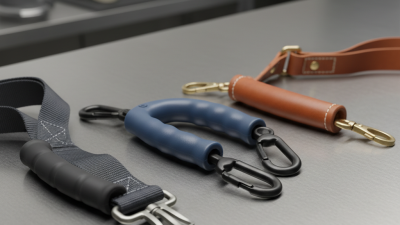
Choosing the right Strap Handles is a small engineering decision with a visible commercial impact. The handle affects lifting comfort, packaging strength, shelf appeal, and repeat use. It also exposes weak design quickly.
Smithers’ report, The Future of Packaging: Global Market Forecasts to 2028, valued the worldwide packaging market at approximately $1.17 trillion in 2023. Its continued growth increases competition for practical, distinctive packaging. PMMI’s consumer and packaging research also highlights convenience, sustainability, and usability as important purchase considerations. A handle that feels sharp, loosens under load, or fails in humid storage can damage trust immediately.
“The package is part of the product,” said Lars Wallentin, former Nestlé packaging design director. That principle is especially relevant to Strap Handles. The handle is not merely an accessory. It is the customer’s first physical contact with the pack.
Start with the real use case. Measure the product’s weight, carrying distance, grip frequency, and storage conditions. Then compare paper, textile, plastic, and reinforced composite options. Check attachment points, tear resistance, moisture exposure, and compatibility with automated packing equipment. A laboratory load test helps, but it cannot replace practical trials with real users.
Details matter.
A comfortable cotton handle may suit a premium gift box. A reinforced polymer handle may better serve a heavy household product. Recyclability can improve sustainability claims, yet mixed materials may complicate recovery. That trade-off deserves honest review.
There is no perfect specification. The right choice balances performance, appearance, cost, and end-of-life goals. Before approval, test full packs, not empty samples. Small failures become expensive lessons.

How to Choose the Right Strap Handles for Your Product?
Define the Product’s Carrying Needs and Handle Requirements
A reliable strap handle begins with the product’s real carrying conditions. Identify its weight, shape, balance, and how often users move it. A soft case may need a flexible handle, while a rigid container needs stronger attachment points. Measure the grip area carefully. Narrow handles can create pressure during longer carries.
Consider the user’s hand size, carrying posture, and typical environment. For outdoor products, moisture resistance and easy cleaning matter. For heavier products, wider webbing can distribute pressure more comfortably. The handle should also remain stable when the product shifts. Small design details matter.
Tips: Test several handle widths with a weighted prototype. Check stitching, seams, and attachment hardware under repeated loads. Leave enough clearance for fingers, but avoid excessive movement. A handle that feels comfortable empty may feel poor when fully loaded. I have seen designs pass a quick test, then fail during repeated daily use. That result is frustrating, but useful.
Record test results, including load weight, duration, and user feedback. Compare performance across different materials and attachment methods. Do not rely only on appearance. A practical handle should support safe, consistent carrying without distracting from the product. You may need to revise the first design. That is normal.
| Product Carrying Need | Typical Product Examples | Recommended Working Load | Recommended Strap Width | Suitable Handle Construction | Recommended Materials | Key Selection Considerations |
|---|---|---|---|---|---|---|
| Lightweight hand carrying | Small gift bags, cosmetic pouches, lightweight apparel packaging | Up to 3 kg | 10–15 mm | Single-layer strap with reinforced attachment points | Polyester, cotton, or polypropylene webbing | Prioritize softness, clean edges, compact folding, and a comfortable hand feel. |
| Regular shopping and daily carrying | Reusable shopping bags, lunch bags, small tote bags | 3–8 kg | 15–25 mm | Folded or tubular webbing with box-X stitching | Polyester or cotton webbing with soft binding | Check the handle drop, seam strength, and comfort when the bag is fully loaded. |
| Extended hand carrying | Travel totes, larger handbags, work bags, equipment cases | 8–15 kg | 25–40 mm | Double-layer, padded, or tubular strap with wide load distribution | High-tenacity polyester, nylon, or cotton-polyester blends | Use a wider grip area and inspect the attachment zone for tearing, stretching, and abrasion. |
| Shoulder carrying | Messenger bags, camera bags, tool bags, medium travel bags | 5–15 kg | 25–50 mm | Adjustable strap with a padded shoulder section | Nylon or polyester webbing with EVA or foam padding | Provide sufficient length adjustment and prevent the strap from twisting during use. |
| Frequent lifting and transport | Tool bags, sports bags, storage cases, portable equipment bags | 15–25 kg | 30–50 mm | Reinforced double-layer handle with wrapped ends and multiple stitch rows | High-strength nylon or polyester webbing | Use conservative load targets, reinforced seams, and abrasion-resistant material at contact points. |
| Outdoor and wet-environment use | Cooler bags, outdoor packs, camping accessories, water-resistant cases | 5–20 kg | 20–40 mm | Quick-drying strap with reinforced stitching and corrosion-resistant hardware | Solution-dyed polyester or nylon | Evaluate water absorption, UV exposure, dirt retention, drying time, and hardware corrosion. |
| Premium appearance and tactile comfort | Premium packaging, lifestyle bags, presentation cases | Up to 8 kg | 15–30 mm | Soft folded strap, braided strap, or wrapped handle | Cotton, recycled polyester, microfiber, or leather alternative | Match texture, color, edge finishing, and handle length with the product’s visual design. |
| Compact storage and retail display | Foldable bags, promotional totes, packable organizers | Up to 5 kg | 10–25 mm | Lightweight flexible strap designed to lie flat | Polyester, polypropylene, or recycled synthetic webbing | Consider folded thickness, recovery after compression, colorfastness, and packing efficiency. |

How to Choose the Right Strap Handles for Your Product?
Compare Strap Handle Materials, Strength, and Durability
Material choice changes how a strap handle feels, carries weight, and survives daily use. Polypropylene is lightweight, moisture-resistant, and economical. Polyester offers better abrasion resistance and lower stretch. Nylon usually provides excellent tensile performance, but it can absorb moisture and cost more. Cotton feels comfortable and natural, yet it may stain, weaken when wet, and vary in quality.
Numbers need context. ASTM D6775 measures breaking strength in textile webbing, but breaking strength is not a safe working load. A handle rated at 300 kilograms should never automatically carry 300 kilograms. Stitching, folds, holes, buckle design, and repeated loading can reduce real performance. I once focused too heavily on the webbing rating. The stitching failed first.
Durability also depends on the product’s environment. For warehouse cartons, polypropylene can handle moisture and rough handling. For reusable bags, polyester often balances strength and abrasion resistance. The Textile Exchange Materials Market Report 2024 states that recycled polyester represented about 15% of global polyester production in 2023. That option may reduce virgin-material demand, but recycled content does not guarantee longer service life. Test it.
Use repeated lift, drop, abrasion, and moisture tests before approval. ISTA packaging test procedures can help simulate distribution hazards, including vibration and drops. Record failures, not only successful samples. A handle that feels strong in a showroom may behave differently beside a loading dock.
Choosing a strap handle starts with use, not appearance. In product testing, I examine how people lift, carry, and set the item down. A soft webbing handle suits flexible bags and light cases. It bends comfortably and stores flat. A rigid plastic or metal handle gives better control for heavier products. However, rigidity can create pressure points against the palm. That detail is easy to miss.
The attachment method must match the product shell and expected load. Sewn webbing works well with fabric, especially with a reinforced box-X stitch. Rivets suit leather, coated textiles, and some rigid panels. They need washers or broad backing areas to prevent pull-through. Heat welding can create a clean bond on compatible thermoplastic materials. Adhesive-only attachment is convenient, but I would not trust it for repeated heavy lifting without test data. The substrate may look strong and still peel near a corner.
I recommend checking the full handle assembly, not just the strap. Pull tests should include sudden loading, twisting, moisture, and repeated cycles. Inspect the seam after each trial. Small fraying matters. Handle length also changes leverage and comfort. A short grip may stabilize a tool, while a longer drop protects knuckles from a hard case. I once approved a neat attachment that passed a static test but failed after sideways loading. That mistake changed my process. Now I test realistic hand positions and imperfect use, because customers rarely lift products perfectly. Replaceability matters, too.
A strap handle should feel natural before it looks attractive.
The World Health Organization’s 2022 musculoskeletal health report estimates that 1.71 billion people live with related conditions worldwide. Poor grip design can add unnecessary strain during repeated carrying.
A wider strap is not always better. Test webbing width, edge softness, grip diameter, and pressure distribution with real users.
NIOSH’s Revised Lifting Equation uses 23 kilograms as a recommended limit under ideal conditions. Distance, twisting, repetition, and awkward posture reduce that limit.
A handle should survive static, pull, drop, and repeated-use testing. Check stitching, attachment points, and slippage when hands are wet or gloved.
One test can still mislead. Product context matters.
Appearance affects perceived quality, but decoration must not hide weak construction.
McKinsey’s 2023 global packaging survey found that roughly 60–70% of consumers would pay more for sustainable packaging. That preference makes material choice important, but sustainability claims require evidence.
Match the handle’s color, texture, and finish with the product’s visual language. A matte surface may feel technical; soft woven fibers may suggest warmth.
Use consistent proportions across sizes. Small mismatches look accidental.
Evaluate samples under retail lighting, not only in a workshop. A handle that photographs well may feel cheap in the hand.
Choosing the right strap handle requires more than checking its appearance or quoted load capacity. A handle may feel comfortable in a sample room but behave differently during shipping and daily use. Test the selected strap handle before full-scale production. This step reveals weak stitching, uncomfortable edges, and attachment problems while changes remain affordable.
Begin with samples made from the intended fabric, hardware, thread, and fastening method. Pull each handle gradually, then apply repeated loads that reflect real use. A filled product should be lifted, carried, set down, and lifted again.
Record stretching, twisting, fraying, and movement around the attachment points. Small details matter. A loose stitch can become a complete failure.
Test the handle in dry and damp conditions. Examine it after heat exposure, cold storage, and repeated handling. Ask several users to carry the product with different grips and hand sizes.
Their feedback may challenge the original design. One early sample I tested felt strong but cut into the hand after several minutes. We improved the width, yet the revised version became harder to fold. That trade-off needed another round of testing.
Do not rely on one successful sample. Inspect multiple units and compare results against your internal safety margin. Keep photographs, measurements, test loads, and failure notes in a controlled record. A clear test history supports production decisions and helps the team identify whether the problem comes from the strap, stitching, hardware, or product body.