Top Case Handle Options for Global Buyers in 2026?
As global markets evolve, the demand for innovative case handle solutions is on the rise. Buyers are now seeking assorted styles and functionalities that suit their diverse needs. In 2026, case handle options must encompass aesthetics, durability, and user experience. The right choice can greatly enhance product appeal.
Quality case handles are crucial for various industries. Buyers should consider materials, ergonomics, and manufacturing techniques. Understanding customer preferences is essential for selecting the best case handle. However, not every option meets expected standards. Some may lack durability or fail to deliver comfort.
Reliable suppliers will provide transparency regarding their products. They should also address concerns about sustainability and ethical sourcing. In an ever-competitive market, understanding these factors can guide buyers towards sound investment decisions. Selecting the perfect case handle should reflect quality and strategic value.

Understanding Global Consumer Preferences for Case Handles in 2026
In 2026, the preferences for case handles among global consumers are evolving rapidly. A recent report by Global Market Insights indicates that ergonomic designs are gaining traction. Comfort and ease of use are now top priorities. Features like soft-touch grips and lightweight materials are increasingly favored. Data reveals that over 70% of consumers consider comfort the most critical aspect when purchasing bags.
Sustainability is another area influencing consumer choices. A survey by Statista found that 65% of consumers prefer eco-friendly materials. They seek handles made from sustainable resources. This shift reflects a growing awareness of environmental impacts. In addition, consumers express concerns about long-term durability. They want products that last, reducing waste over time.
Though these preferences are clear, challenges remain. Manufacturers struggle to balance cost and quality. Developing handle designs that meet both ergonomic and sustainable criteria can be complex. There's also the issue of market saturation. Differentiation becomes key in a crowded space. Consumers might still choose familiar options over innovative solutions if they feel overwhelmed.
Market Analysis: Leading Materials for Case Handles and Their Demand Trends
As the case handle market evolves, the materials used are critical in meeting buyer demand. Industry reports indicate that plastic handles will dominate the market, expected to hold over 45% share by 2026. Their lightweight nature makes them appealing. Manufacturers are drawn to plastics for cost efficiency and versatility. However, questions about durability arise, especially under heavy use scenarios.
Metal handles follow closely, anticipated to rise in popularity. Magnesium and aluminum offer strength and aesthetic appeal. Analysts predict a 15% growth in metal handle demand by 2026. But while they boast robust performance, issues such as weight and cost may deter some buyers.
Wooden handles also have a niche market, appreciated for their craftsmanship. This segment, however, faces sustainability challenges and inconsistent supply. Research indicates that consumers show interest in responsibly sourced materials. There is an ongoing discussion about the trade-offs between aesthetics and environmental impact. As trends shift, global buyers must weigh these factors when making decisions.
Innovative Design Trends in Case Handles: What Buyers Should Expect
In 2026, buyers can expect to see a remarkable shift in the design of case handles. Innovative materials and ergonomic shapes will be key trends. Designers will focus on enhancing user comfort. Handles made from sustainable materials will resonate with eco-conscious consumers. We could see wood, recycled plastics, and bio-based composites gaining popularity.
Color and finish will play an essential role in new designs. Matte, textured surfaces will replace glossy finishes. Buyers will seek unique aesthetics to stand out. Vibrant colors are expected to make a comeback, adding personality to products. However, maintaining durability while pursuing bold designs might prove challenging for manufacturers.
Merging technology with functionality is another trend to watch. Smart handles that offer additional features could emerge. Buyers might find options that allow personalization, like adjustable grip sizes. Yet, not all consumers may appreciate these tech-driven changes. Many still prefer simplicity and tradition in their case handle designs. Balancing modern trends with timeless appeal will be a delicate task for designers and manufacturers alike.
Top Case Handle Options for Global Buyers in 2026
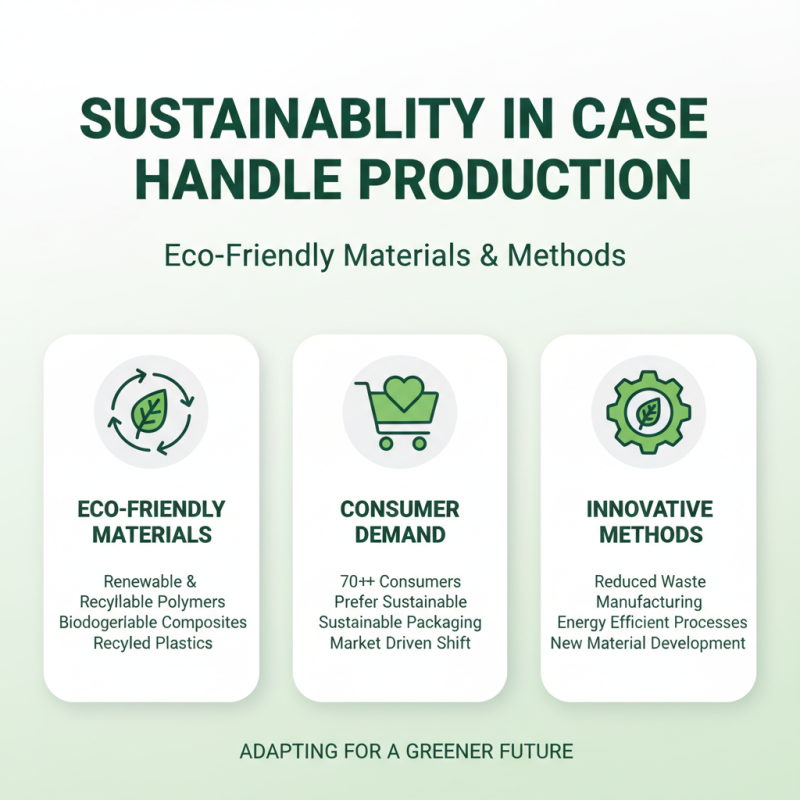
Sustainability in Case Handle Production: Eco-Friendly Materials and Methods
Sustainability is at the forefront of case handle production. Manufacturers are increasingly opting for eco-friendly materials. Research indicates that over 70% of consumers prefer products with sustainable packaging. This shift challenges producers to adapt and innovate.
Bio-based plastics, recycled metals, and sustainable wood are gaining traction. A report estimates that bio-based plastic usage could reach 20 million tons by 2026. These materials not only reduce carbon footprints but also meet evolving customer demands. However, sourcing these materials sustainably remains a challenge for many manufacturers.
Tips: Consider local sourcing to minimize transportation emissions. Evaluate the lifecycle of materials to ensure minimal environmental impact. Remember, increasing sustainability may require upfront investment but can lead to long-term cost savings. As the industry progresses, adapting to these changes is not only necessary but beneficial.
Technological Advancements Impacting Case Handle Manufacturing by 2026
The case handle manufacturing industry is on the brink of transformation by 2026. Emerging technologies are reshaping production processes, enhancing efficiency and sustainability. Reports indicate that the global market for case handles is projected to reach $3.5 billion by 2026, reflecting a compound annual growth rate of 5.3%. Automation plays a key role in this growth. Robotics and AI are streamlining assembly lines, leading to significant reductions in labor costs and production time.
Moreover, materials technology is advancing rapidly. Manufacturers are increasingly utilizing lightweight composites and eco-friendly materials. These innovations not only enhance product durability but also appeal to environmentally conscious consumers. Yet, challenges remain. The integration of new materials requires extensive research and development. Companies often face difficulties in balancing cost and performance while ensuring compliance with global standards.
Another important factor is the trend toward personalized design. Customization demands are rising. Consumers want handles that suit their unique styles and preferences. Companies must adapt their production strategies to meet these expectations. While innovations streamline operations, they also necessitate a reconsideration of manufacturing approaches. Adaptability may be the key to remaining competitive in a fast-evolving market.