Leave Your Message

Top Flat Corner Brace Manufacturers for Global Buyers?

Global buyers are paying closer attention to small structural components. A Flat Corner Brace can influence joint alignment, load transfer, installation speed, and long-term durability. These details matter when brackets are used in timber frames, cabinets, crates, furniture, or light construction assemblies.

Industry reports support this wider focus. Freedonia’s World Construction Fasteners analysis highlights continuing demand for reliable fastening systems across international building markets. Grand View Research also identifies construction activity, renovation, and manufactured wood products as important growth drivers for fastener consumption. These reports do not measure Flat Corner Brace sales separately, which is an important limitation. Buyers should avoid treating general fastener data as a precise market forecast.

Performance begins with the connection.

Building-science expert Dr. John Straube has repeatedly emphasized the need to control “rain, air, heat, and vapor” within building assemblies. That principle also supports careful brace selection, especially where moisture, coating failure, or concealed corrosion may weaken a joint. A dependable supplier should provide steel grade information, coating specifications, dimensional tolerances, load guidance, and traceable quality records.

This guide reviews leading Flat Corner Brace manufacturers for global buyers. It considers production experience, engineering support, export capability, packaging, customization, and documented testing. Some manufacturers appear strong on catalog breadth but weaker on technical transparency. Others offer excellent fabrication yet limited regional support. That difference can affect installation costs.

No ranking should replace project-specific verification. Confirm thickness, hole diameter, screw compatibility, corrosion environment, and expected loading before purchase. Even a modest bracket deserves serious scrutiny.
Top Flat Corner Brace Manufacturers for Global Buyers?

What Are Flat Corner Braces and Where Are They Used?

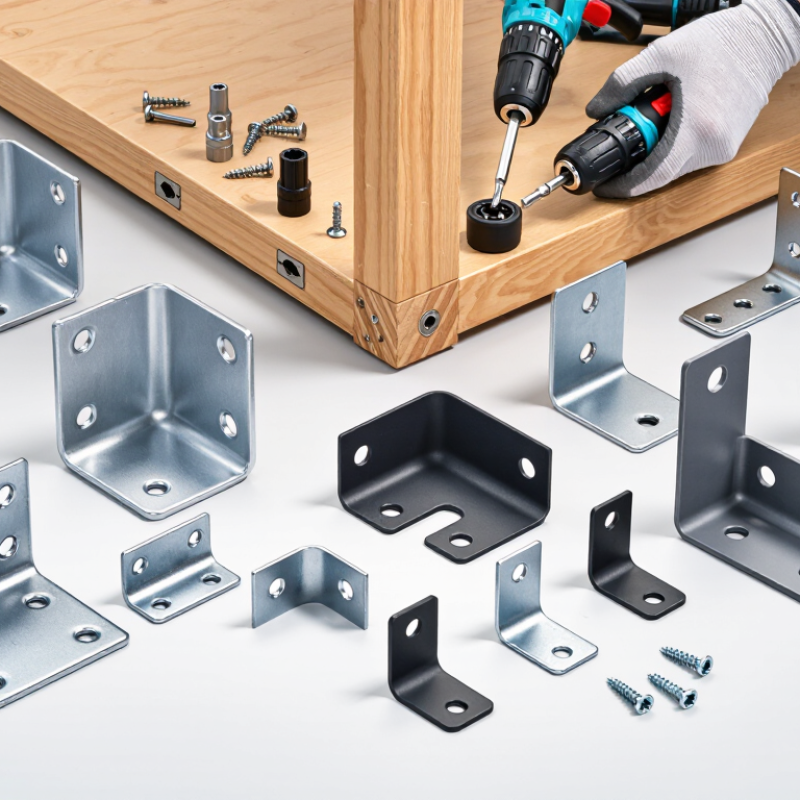
Flat corner braces are compact metal fittings that reinforce a 90-degree joint. They usually have two flat legs, pre-drilled holes, and a bend at the center. In workshops, installers use them on timber frames, cabinets, shelving, crates, and light structural assemblies. Their purpose is simple: reduce movement and keep connected parts aligned.

The correct brace depends on load, material, hole spacing, thickness, and surface conditions. Zinc-plated steel suits many indoor projects, while stainless steel performs better in damp environments. Buyers should request dimensional drawings, material specifications, coating details, and load-test information from manufacturers. These documents make comparisons more reliable. A brace may look strong but still fail when screws are too short or the joint is poorly fitted. That detail is easy to overlook.

Tips: Match the brace thickness to the joint’s expected load. Check whether the screw holes fit your fasteners. Inspect corners for sharp edges, uneven bends, or coating damage. For international orders, confirm packaging strength, tolerances, inspection procedures, and traceability. Sampling is wise, although it adds time and cost. Flat corner braces are not a universal fix; flexible frames may need gussets, longer fasteners, or a different joint design. Experiences from real installations often reveal weaknesses that product sheets miss.


Key Standards for Evaluating Global Brace Manufacturers

Top Flat Corner Brace Manufacturers for Global Buyers?

Key Standards for Evaluating Global Brace Manufacturers

Global buyers should evaluate flat corner brace manufacturers through evidence, not catalog language. A reliable supplier provides material certificates, dimensional drawings, and recent inspection records. Ask whether the brace uses galvanized steel, stainless steel, or another specified grade. The choice affects corrosion resistance, strength, and service life. Check hole diameter, bend angle, thickness, and edge finish against approved drawings. Small deviations can create visible gaps during assembly.

Request samples before approving a large order. Measure them with calipers and test fit them on the intended timber or metal section. For structural applications, require testing that matches the force direction, fastener type, and mounting surface. Generic load claims are weak evidence. They may not reflect field conditions. Ask which ASTM, EN, or national requirements apply to the product. Where no product-specific standard exists, demand clearly documented internal specifications.

Manufacturers with strong quality controls should explain batch tracking, calibration, nonconformance handling, and corrective actions. Certifications help, but certificates should be current and independently verifiable. Each carton should identify the batch, material, quantity, and production date. Packaging must protect plated surfaces from moisture and abrasion during transport. Review destination labeling and import requirements before shipment. Requirements differ by country and application. A showroom sample is not enough. Inspect actual production when possible. Responsive communication matters, but it cannot replace test data. One missed tolerance may reveal a weak process.

Leading Flat Corner Brace Manufacturers by Production Strengths

Top Flat Corner Brace Manufacturers for Global Buyers

Leading flat corner brace manufacturers stand out through stable production, not impressive catalog images alone. Experienced factories use controlled stamping lines to form clean angles and consistent hole patterns. Their production strength often includes progressive dies, automated punching, and adjustable press capacity. These systems support both standard orders and carefully managed custom dimensions. Material control matters too. Reliable manufacturers verify steel thickness, hardness, and surface condition before production begins. In practice, small variations can affect screw alignment and joint stability.

Tips: Ask for sample braces, material reports, coating details, and recent inspection records. Review production capacity against your expected monthly volume. A factory may promise high output, yet struggle during peak seasons. Confirm packaging strength with a simple drop test. Check whether cartons protect sharp edges and prevent rust during transit. Communication speed also reveals operational discipline.

Quality control should continue after stamping. Strong suppliers inspect hole diameter, corner squareness, burr levels, and coating adhesion. Some use gauges for every batch, while others rely on periodic checks. Neither method is automatically sufficient. Buyers should request measurable tolerances and corrective-action records. Production experience is valuable, but it should remain visible in documents and samples. Even capable manufacturers can miss issues when tooling becomes worn. Regular die maintenance, clear batch identification, and traceable inspections reduce that risk. A thoughtful sourcing decision balances capacity, repeatability, technical support, and honest limitations.

Top Flat Corner Brace Manufacturers for Global Buyers? - Leading Flat Corner Brace Manufacturers by Production Strengths
Manufacturer Profile Primary Production Strength Typical Materials Manufacturing Processes Product Customization Quality and Compliance Focus Best Fit for Global Buyers
High-Volume Stamping Specialist
Production Strength: Very High
Consistent output for standard flat corner braces and repeat-order programs. Cold-rolled carbon steel, galvanized steel, stainless steel, and pre-coated sheet steel. High-speed stamping, progressive die forming, punching, deburring, and automated sorting. Standard hole patterns, fixed thickness ranges, bulk packaging, and private-label packaging without displaying brand information in this comparison. Dimensional inspection, coating-thickness checks, load testing, batch traceability, and quality systems aligned with ISO 9001 practices. Distributors, hardware wholesalers, furniture assemblers, and buyers requiring stable repeat supply.
Custom Metal Fabrication Specialist
Production Strength: High
Flexible manufacturing for non-standard dimensions, hole layouts, angles, and thicknesses. Mild steel, stainless steel, aluminum, and corrosion-resistant coated steel. CNC punching, laser cutting, press-brake forming, spot welding, tapping, and secondary machining. Custom lengths, hole diameters, countersunk holes, mounting slots, bends, weldments, and prototype quantities. Drawing review, first-article inspection, tolerance control, material certificates, and sample approval before mass production. Engineering projects, replacement-part programs, construction hardware, and buyers with technical drawings.
Corrosion-Resistant Hardware Specialist
Production Strength: High
Strong capability in rust-resistant braces for humid, outdoor, coastal, and industrial environments. Stainless steel grades commonly used for hardware, hot-dip galvanized steel, zinc-plated steel, and aluminum. Precision stamping, passivation where applicable, electroplating, hot-dip galvanizing, and protective finishing. Surface finish selection, salt-spray test requirements, edge-treatment options, and packaging for moisture protection. Coating adhesion, salt-spray performance, corrosion inspection, material identification, and documented surface-treatment controls. Outdoor structures, agricultural equipment, marine-adjacent installations, and export markets with demanding climate conditions.
Furniture and Cabinet Hardware Specialist
Production Strength: High
Efficient production of compact braces for cabinetry, furniture frames, shelving, and joinery. Cold-rolled steel, zinc-plated steel, stainless steel, and powder-coated steel. Stamping, forming, countersinking, edge finishing, automated plating, and retail-ready packing. Multiple hole configurations, compact dimensions, decorative finishes, color matching, and barcode-ready packaging. Hole-position accuracy, burr control, coating uniformity, fit testing, and packaging drop checks. Furniture manufacturers, kitchen suppliers, online hardware sellers, and retail distribution networks.
Construction and Structural Hardware Specialist
Production Strength: High
Heavy-duty production for braces requiring higher material thickness, stronger fastener zones, and dependable load performance. Structural carbon steel, hot-dip galvanized steel, stainless steel, and high-strength low-alloy steel where specified. Heavy-gauge stamping, reinforced forming, welding, drilling, galvanizing, and mechanical load testing. Reinforced corners, elongated slots, thicker gauges, custom hole spacing, and project-specific load requirements. Tensile and shear testing, dimensional reports, weld inspection, coating verification, and traceable material documentation. Timber framing, prefabricated structures, racking systems, building maintenance, and infrastructure-related projects.
Integrated OEM and Export Supplier
Production Strength: Very High
Coordinated design, tooling, production, finishing, inspection, warehousing, and international shipment preparation. Carbon steel, stainless steel, galvanized steel, aluminum, and customer-specified alloys. In-house tooling, stamping, CNC processing, welding, surface treatment, assembly, inspection, and export packing. Product development support, tooling design, samples, packaging formats, carton markings, mixed-SKU orders, and scheduled releases. Supplier audits, process controls, inspection plans, export documentation, lot traceability, and pre-shipment inspection. International distributors, OEM programs, multi-country procurement, and buyers seeking one coordinated supply chain.
Small-Batch and Rapid-Prototype Manufacturer
Production Strength: Medium to High
Fast development cycles and economical production for samples, pilot runs, and limited-volume requirements. Mild steel, stainless steel, aluminum, galvanized sheet, and other commonly available sheet metals. Laser cutting, CNC punching, manual or semi-automatic forming, welding, and outsourced finishing when required. Short-run dimensions, prototype revisions, small minimum order quantities, and engineering-change support. Drawing confirmation, prototype measurement, material verification, visual inspection, and sample-based approval. Start-ups, product developers, maintenance departments, custom fabricators, and buyers testing new designs.
Automated Finishing and Packaging Specialist
Production Strength: High
Efficient post-processing for high-volume orders requiring consistent appearance and shipment-ready presentation. Carbon steel, galvanized steel, stainless steel, and pre-treated sheet metal. Stamping, vibratory deburring, electroplating, powder coating, automated counting, and carton packing. Finish selection, color-coded product groups, anti-scratch packaging, compartment packing, and customized carton quantities. Surface appearance inspection, coating coverage, count verification, package integrity, and batch identification. Retail channels, e-commerce fulfillment, hardware distributors, and buyers prioritizing presentation and packing consistency.

Materials, Finishes, Sizes, and Customization Options

Top Flat Corner Brace Manufacturers for Global Buyers?

Material choice should match the installation environment, not only the purchase price. Carbon steel suits general furniture and construction applications. Stainless steel performs better near moisture, salt, or frequent cleaning. Aluminum offers lower weight, but it may provide less rigidity in heavy-duty assemblies. During production inspections, I check thickness, hole alignment, edge quality, and visible deformation. Small inconsistencies can create fitting problems later.

Finishes affect corrosion resistance, appearance, and maintenance. Zinc plating gives carbon steel a practical protective layer for indoor use. Powder coating adds color and a tougher surface for exposed applications. Hot-dip galvanizing may suit harsher outdoor conditions, although its thicker coating can affect tight tolerances. Brushed or polished stainless steel provides a cleaner appearance. The finish should match the substrate and operating conditions.

Sizes commonly vary by leg length, width, thickness, and hole diameter. Buyers should confirm load requirements before selecting a standard brace. Custom manufacturers can adjust hole spacing, bend angles, mounting slots, and material gauges. They may also provide samples, inspection reports, drawings, and export-ready packaging. Clear tolerances matter. I have seen attractive samples fail during batch production because specifications were incomplete. A reliable supplier should explain limitations, report deviations honestly, and confirm changes before manufacturing. Not every customization is practical. Sometimes, a simpler size improves strength, cost, and delivery reliability.

Flat Corner Brace Specifications for Global Buyers

The chart shows common catalog thicknesses for flat corner braces across widely used size ranges. Carbon steel braces are commonly zinc-plated or powder-coated, while stainless steel options are typically supplied in 304 or 316 grades for improved corrosion resistance. Buyers can usually request custom hole patterns, leg lengths, thicknesses, finishes, countersunk holes, and packaging.

Values represent common non-branded industry specifications; actual load capacity depends on material grade, fasteners, installation method, and substrate.

How Global Buyers Can Compare Suppliers and Place Orders

Global buyers comparing flat corner brace manufacturers should begin with measurable specifications, not polished catalogs. Ask for steel grade, thickness, hole diameter, bend angle, coating type, and tested load capacity. A 2 mm brace with zinc plating may suit indoor furniture, while outdoor projects may require stronger steel and corrosion protection. Request drawings, samples, inspection records, and photos of packed cartons before discussing price.

Industry data supports careful purchasing. The World Steel Association’s April 2024 Short Range Outlook projected global steel demand growth of 1.7% in 2024 and 1.2% in 2025. That growth can affect material prices and delivery schedules. The ISO Survey 2022 recorded more than 1.26 million ISO 9001 certificates worldwide. Certification helps, but it does not replace product testing or factory communication. Check whether the supplier controls batch records, incoming materials, and final inspections.

When placing an order, confirm MOQ, sample fees, production time, packaging dimensions, export documents, payment milestones, and agreed Incoterms. Compare total landed cost, not only the unit quotation. A low price can hide thin packaging or unstable coating quality. Ask for a pre-shipment inspection with clear acceptance limits. Small details matter, such as carton labels and mixed-size separation. My own caution is simple: a perfect comparison sheet can still miss a supplier’s weak response after payment. Send one pilot order first. Measure the delivered braces, inspect the holes, and record any defects before scaling up.